How to Read a River: Pools, Riffles, Runs & Pocket Water
Before you ever tie on a fly, you need to ask one question: where are the fish?
Trout are cold-blooded and they don't waste energy. They position themselves where the current delivers food with minimal effort, where they feel safe from predators, and where water temperature and oxygen levels are comfortable. Learn to read those spots on any river and you'll find fish — even on water you've never fished before.
The four fundamental water types you'll encounter on every Northern Colorado river are pools, riffles, runs, and pocket water. Each holds trout differently and calls for different tactics.
Pools
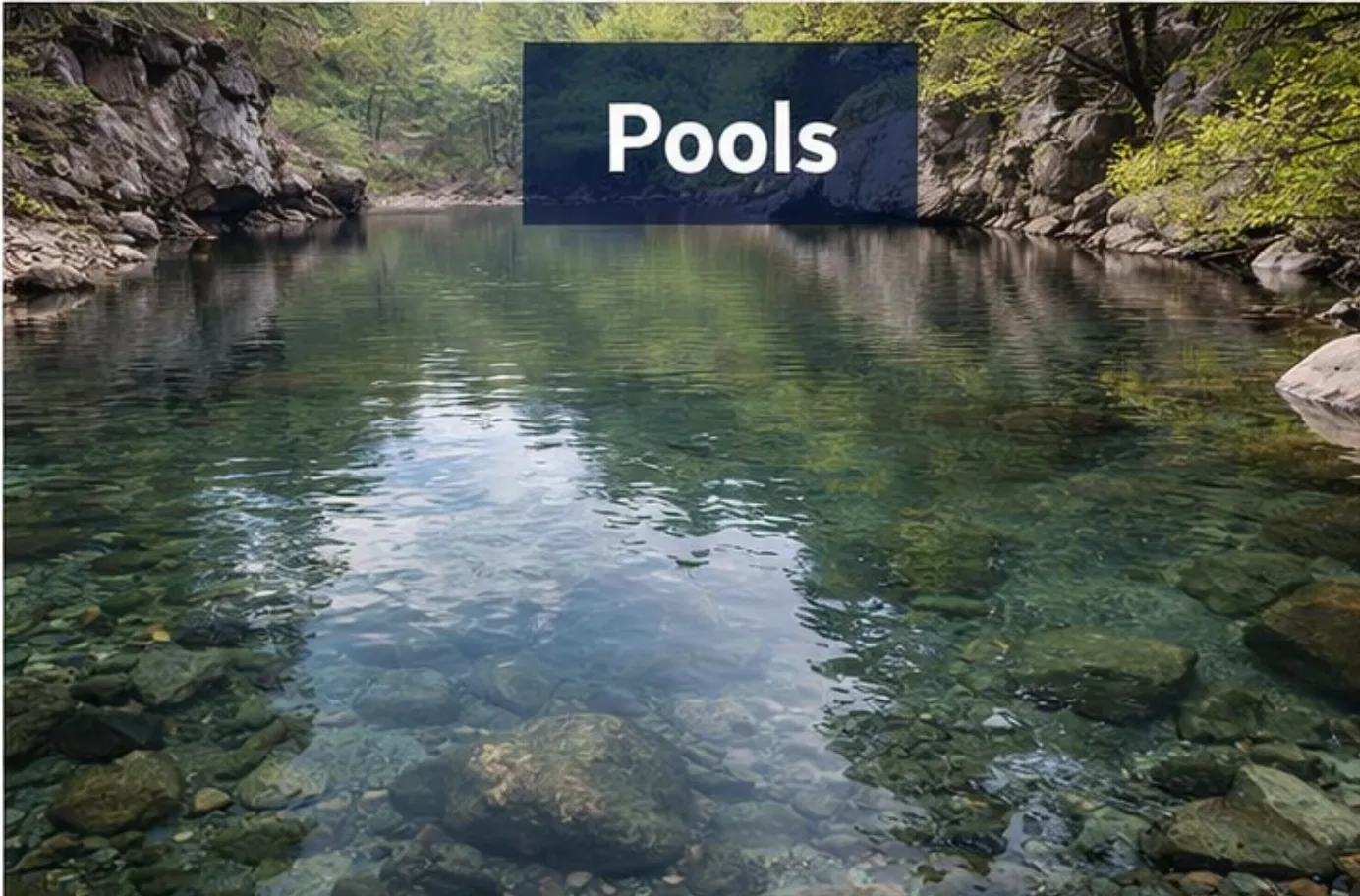
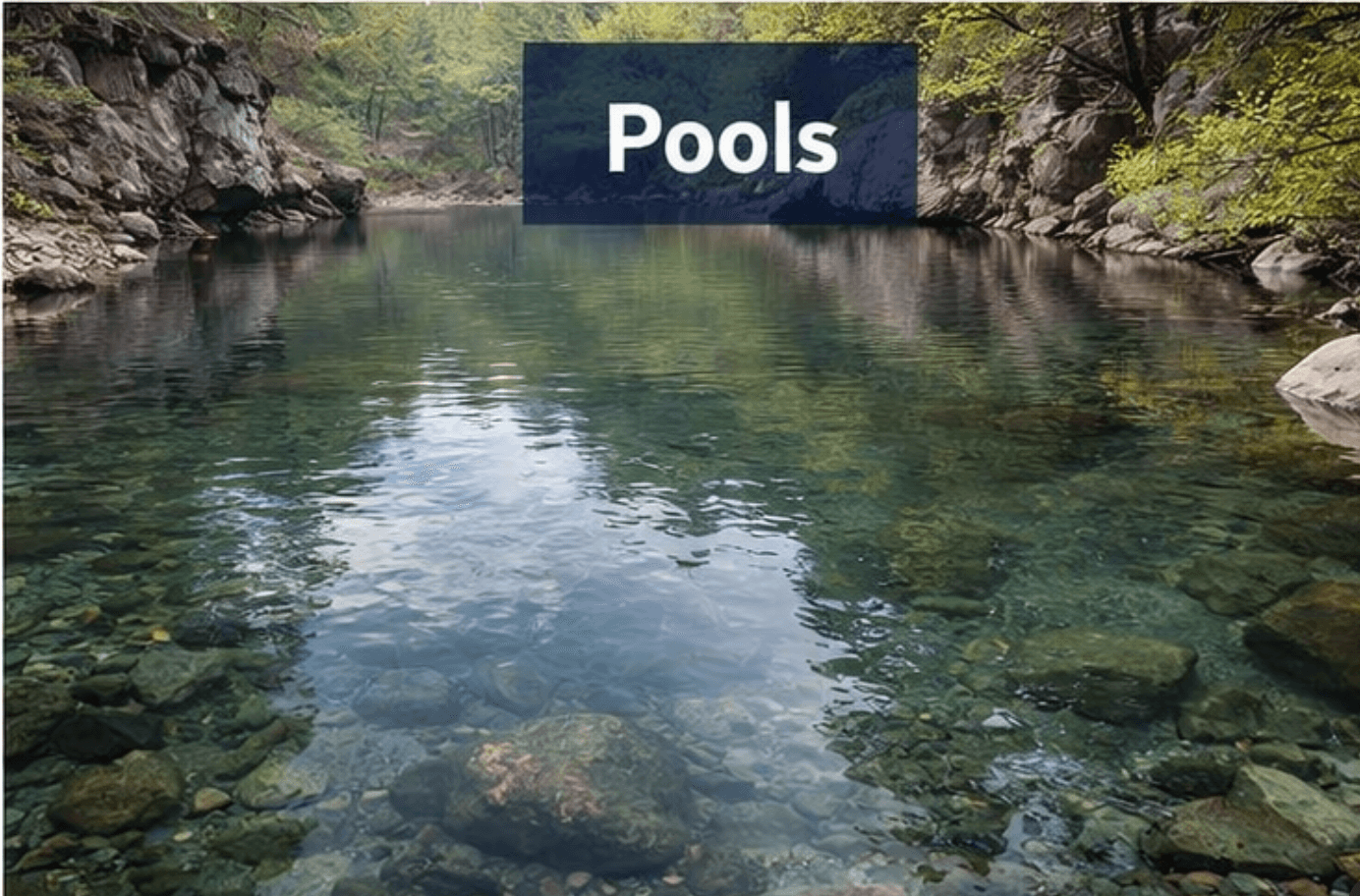
A pool is the deepest, slowest section of a river — typically formed where fast water loses energy around a bend, below a waterfall, or at the tail of a long riffle. Pools are where the biggest fish in a system often live, particularly during low, clear conditions and in summer heat when deep water stays coolest.
Pools are often tricky to fish. The flat, slow surface reveals every drag flaw in your presentation, and fish have time to scrutinize your fly. Fish the tail of the pool first — that's where current speed increases slightly and trout station up to intercept drifting food. The head of the pool, where faster water dumps in, is excellent during a hatch.
Riffles
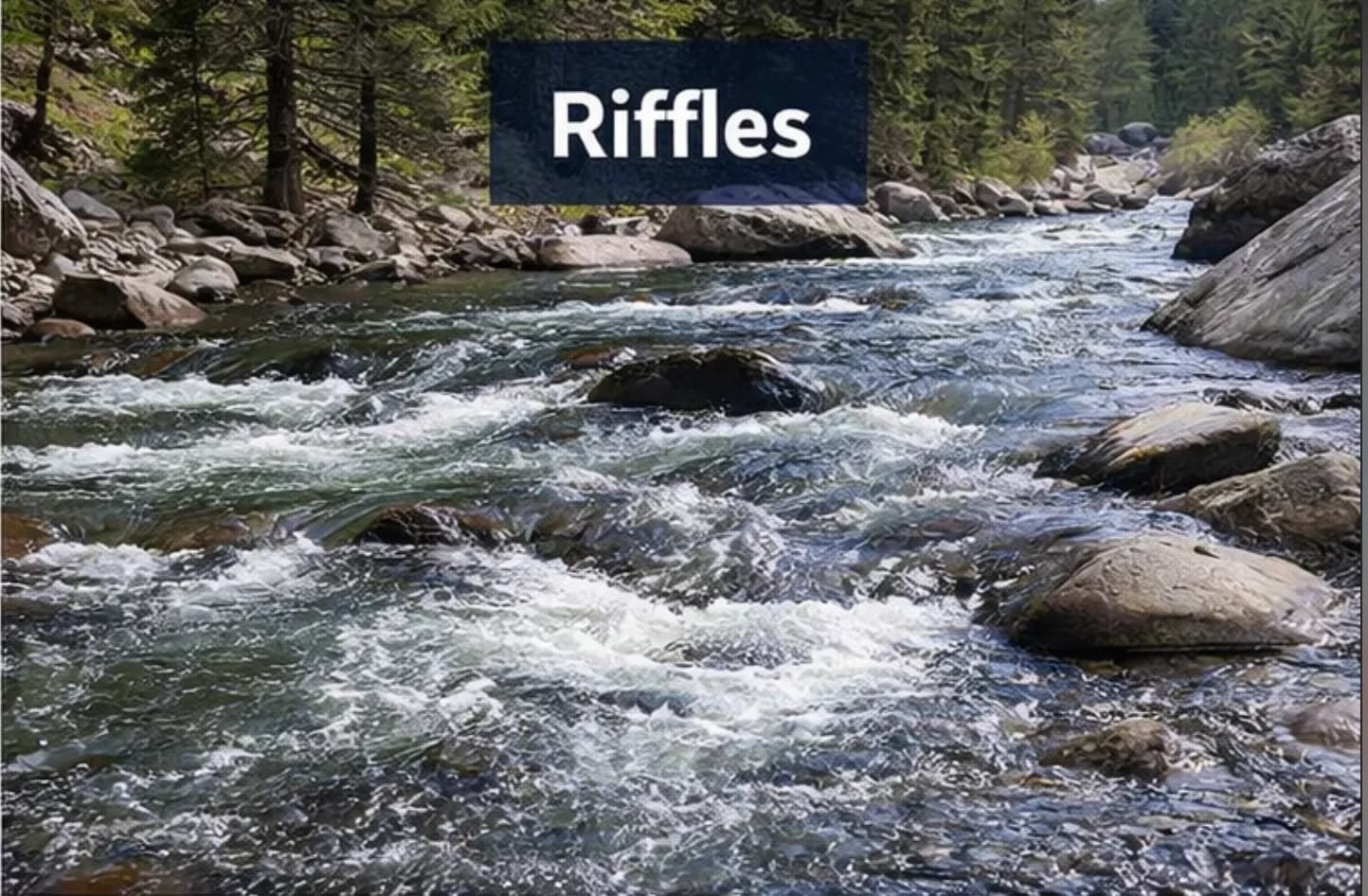
Riffles are the shallow, fast, choppy sections between pools — often only 6 to 18 inches deep with a rocky bottom. They look too thin to hold fish, but riffles are among the most productive feeding zones on the river. The turbulent surface breaks up the fish's view of you and your leader. Aquatic insects (caddis, stoneflies, mayfly nymphs) live in the rocky substrate, making riffles a natural buffet.
Nymph fishing through riffles with a tight drift is deadly year-round. During evening caddis hatches, trout will push into riffles and slash at emerging insects in only inches of water.
Runs
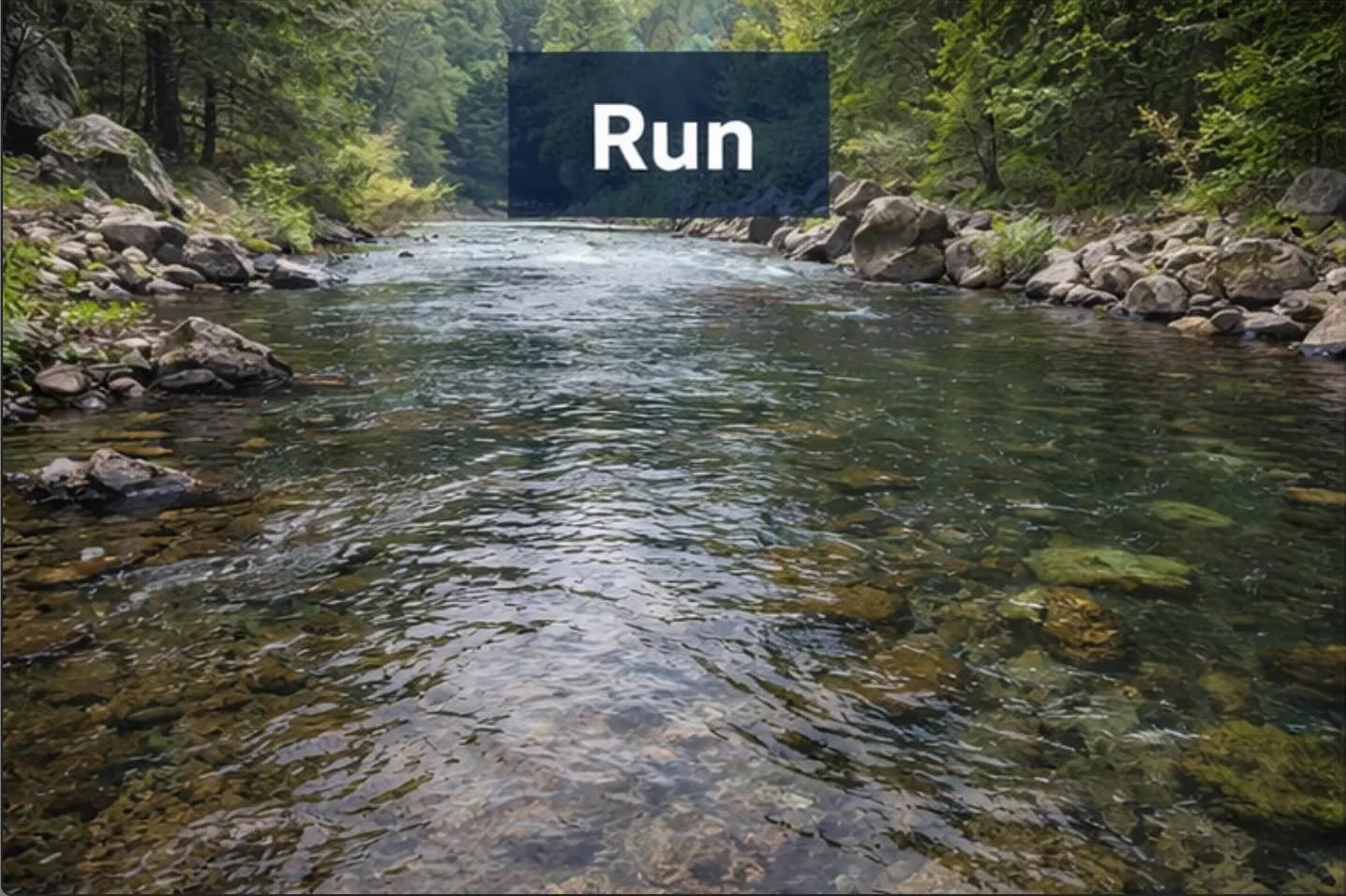
A run is the section between a riffle and a pool — moderate depth (typically 2 to 4 feet), moderate current, and a relatively even bottom. Runs are arguably the most consistently productive water type for fly fishing. The current is steady enough to keep food moving past fish quickly, but slow enough that trout can hold without burning energy.
Indicator nymphing shines in runs. Find the seam where faster current meets slower water along the bank or behind a mid-stream rock, and you'll consistently find fish.
Pocket Water
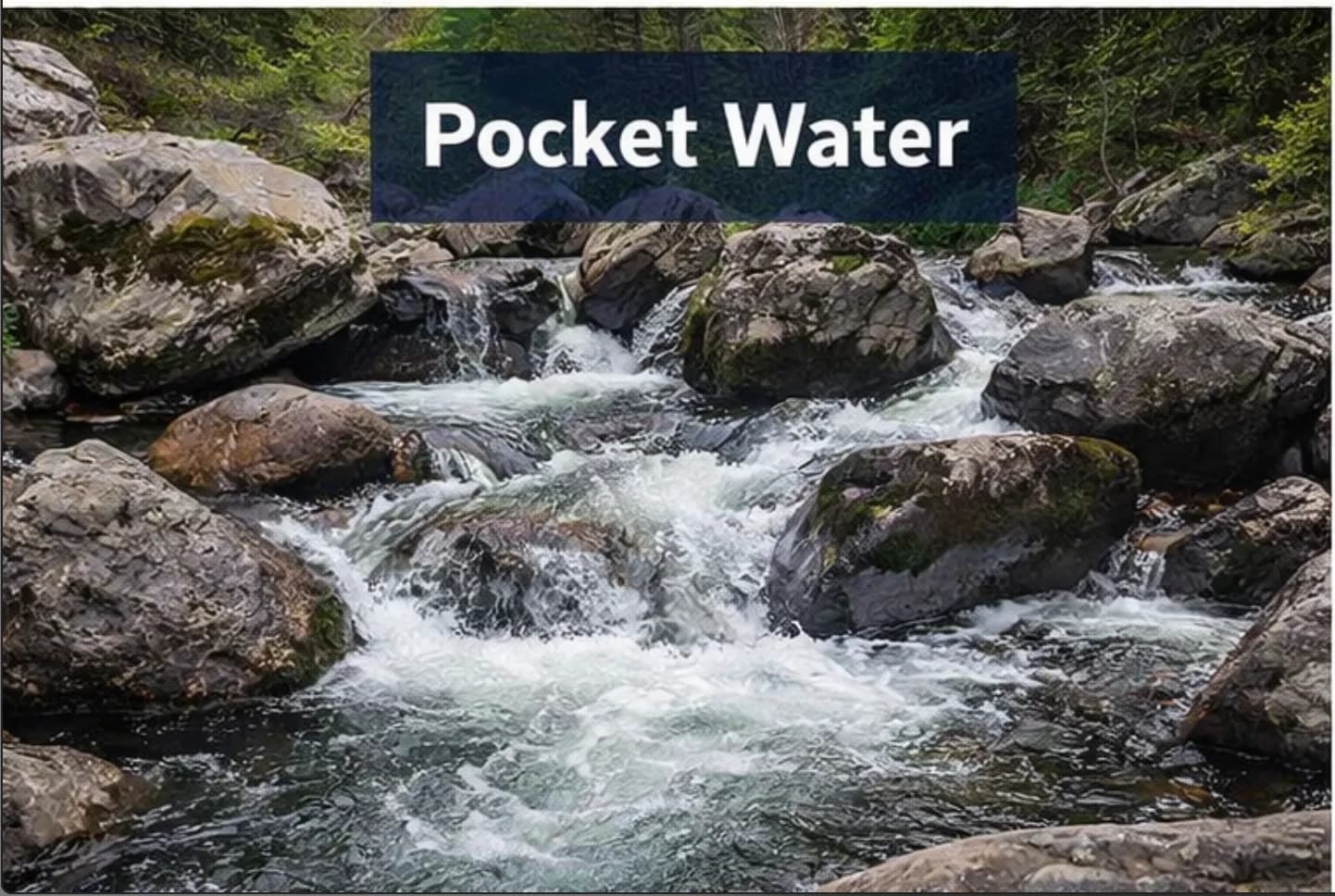
Pocket water is the chaotic, fast, boulder-strewn water that characterizes canyon streams like the Cache la Poudre. Large rocks break the current, creating a patchwork of calm "pockets" directly behind and in front of each boulder. Trout stack in these pockets — they get protection from the rocks and current breaks that allow them to hold in fast water with minimal effort.
Pocket water rewards short, accurate casts and a high-stick nymph technique (keeping as much line off the water as possible). The broken surface gives you a big presentation advantage — your leader is almost invisible and drag is easily masked. Fish every pocket methodically, moving quickly from rock to rock.
Reference Photos